Math Instruction: Spiral vs. Mastery


 Source: ENRICHri thanks and credits Granite State Home Educators (NH) for use of this article. We couldn’t have said it better ourselves! *Some of the resources are not secular.


There are two different approaches to math instruction; spiral and mastery. Some children learn math better with one approach instead of the other, but there is no one “best” approach.


SPIRAL

The spiral approach refers to a built-in review of previous concepts throughout the curriculum as new topics are introduced. The student practices new concepts incrementally and reviews previously introduced topics so they build on each other systematically.


Pros:

  • The child can practice with incremental steps towards understanding new concepts.
  • If the student needs more practice or time to understand a concept, there are many opportunities to review and practice that are built into the materials.
  • Understanding and skill develop over time.
  • The child’s math skills and knowledge does not go stale and he/she is less likely to forget concepts.
  • The child is able to make connections between the different concepts as they are revisited throughout the materials over time.
  • Some children find it more interesting because they are learning something new and different instead of focusing on the same concept for an extended period.


Cons:

  • Some children find this approach too slow or repetitive.
  • Children may be overwhelmed learning a new concept before completely understanding the previous topic. It may feel like the material is too hard to keep up with and remember.


Spiral Math Programs:

  • Teaching Textbooks
  • Saxon Math
  • Abeka Math*
  • Go Math
  • The Good and the Beautiful Math*
  • Horizons Math*
  • RightStart Math
  • BJU Math*


MASTERY

Mastery requires the student to completely comprehend a topic, forwards and backwards, before moving on to the next topic.


Pros:

  • Focus on one topic at a time, in a sequential way.
  • The child may work at his/her own pace.
  • This approach builds a strong foundation before adding on new information.
  • Often prevents learning gaps.
  • Commonly used approach by public schools, so may be helpful if the child is enrolled in a traditional school later.


Cons:

  • Some curricula have minimal review and mastery may be diminished without the review.
  • If the child needs additional resources to gain mastery, he/she could exhaust the materials in the curriculum.
  • Children may become bored or frustrated working on the same concept every day for an extended time.
  • The idea of “mastery” can be challenging or stressful for students as it could be interpreted as requiring perfection.


Mastery Math Programs:

  • Math U See
  • CTC Math
  • Khan Academy
  • Math Mammoth
  • Beast Academy
  • Singapore Math
  • Life of Fred*
  • Art of Problem Solving (AOPS)


Other Programs

There are other curricula that take unique approaches that do not fall under spiral or mastery.

  • Life of Fred
  • Miquon


Share Article

Discover More

By Melissa Robb February 12, 2026
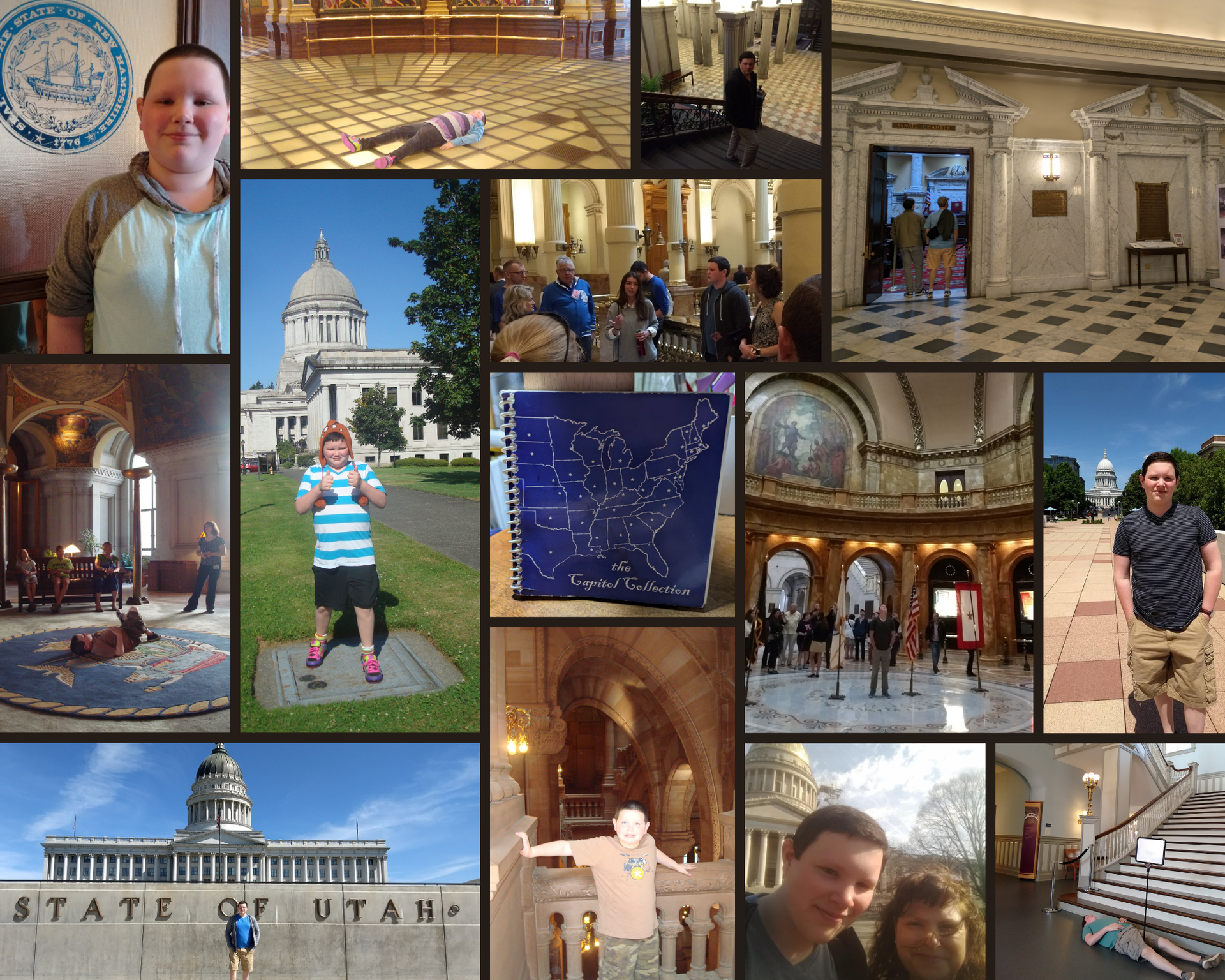
Some of the best learning my family has done didn’t happen sitting at the kitchen table. It happened walking through old buildings, asking questions, and seeing things with our own eyes. State capitol buildings are among our favorite stops, we learn so much about a state by visiting these unique and beautiful buildings. If your family likes to travel—or even just take day trips— The Capitol Collection is a wonderful way to turn those outings into something meaningful and memorable. It is a souvenir passbook ($15) that helps families keep track of visits to state capitol buildings. Each visit becomes more than just a stop along the way—it becomes part of your family’s story. Turning Trips Into Adventures Kids love having a purpose, and visiting capitols gives them one. Instead of just passing through a city, they’re exploring, noticing details, and looking forward to marking another visit in their book. Over time, those pages fill up with memories, and the learning happens naturally along the way. It doesn’t feel like “doing school”—it just feels like life. That’s one of the things I’ve always loved about homeschooling. Learning doesn’t have to be complicated to be meaningful. Our Family’s Story This means a lot to me because of our own experience. Our family has visited 22 state capitols so far. Our first recorded visit was Pierre, South Dakota in 2009 when my son was 10 years old , and at first it was just something fun to do while we traveled. I never imagined how much it would shape him. One of my favorite memories is a tradition he started. Whenever a capitol had a rotunda, he would lie down on the floor and just look up at the dome. He would study the paintings, the shapes, the light—just taking it all in and thinking what that epic element represented. Those quiet moments often turned into some of our best conversations later. At the Oregon state house we were even able to go up INTO the dome, what a climb! Over the years, those visits led to many talks about history, government, and how laws are made. The experience stayed with him so strongly that he even wrote about it in his law school application essay . Visiting state capitols has expanded to exploring government building internationally such as the Reichstag in Germany and Canada’s Parliament in Ottawa. As a parent, it’s an amazing thing to see something that started as a simple family outing become part of your child’s future. Most recently, we visited Maryland’s capitol during a trip to Annapolis. My son is a young man now and living on his own, but when we travel together, this is still something we do. That’s what makes experiences like this so special—they grow with your children. Why Capitol Buildings Are Such Powerful Learning Spaces State capitol buildings offer a unique blend of subjects all in one place: Civics and government come to life when children see legislative chambers and learn how decisions are made. Local history becomes tangible through exhibits, memorials, and stories tied to each state. Art and architecture surround you, often reflecting the values and culture of the region. Critical thinking and curiosity grow naturally as kids ask questions and make connections. Best of all, these lessons don’t feel forced. They happen through exploration and conversation—often led by the child’s own interests. A Journey Worth Remembering Looking back, I’m so thankful we took the time to stop, explore, and learn together. Those capitol visits weren’t just educational—they were time spent together, sharing discoveries and building memories we still talk about years later. Whether your family visits one capitol or dreams of all fifty, the important part isn’t the number. It’s the time spent learning side by side. (There is a Facebook group for this hobby. It’s small but would be a great way for families to share their experiences!)
By Melissa Robb January 6, 2026
Online and Local Resources for Trade School Exploration
By Alyssa Crowder November 17, 2025
"Thoughts about Tech in Homeschooling"
November 3, 2025
Book Review by ENRICHri's Marcia Sirois
By Alyssa Crowder August 28, 2025
How to Decide What to Study in High School
By Alyssa Crowder August 12, 2025
All About Homeschooling High School
By Alyssa Crowder August 12, 2025
AI for Middle Schoolers, High Schoolers and Adults
By Alyssa Crowder August 5, 2025
What is it and Does it Matter?
By Alyssa Crowder July 29, 2025
Am I Doing Enough? Advice from the Experts
By Alyssa Crowder July 22, 2025
What to Track and Keep
By Alyssa Crowder July 14, 2025
Go Beyond Just Checking Out Books
By Alyssa Crowder July 7, 2025
What You Need to Know About Dual Enrollment
By Alyssa Crowder June 30, 2025
Using StoryMaps to Answer Questions
By Alyssa Crowder June 23, 2025
Planning for Letters of Recommendation
By Alyssa Crowder June 16, 2025
Crafting Course Descriptions
By Alyssa Crowder May 21, 2025
Resources to Help Librarians Understand, Connect with and Support the Homeschoolers in Their Communities
By Alyssa Crowder April 6, 2025
Join with ENRICHri to fight for library funding!
By Melissa Robb February 21, 2025
What's in Your Control?
By Alyssa Crowder January 30, 2025
From Gummy Bears to Good Friends...
By Alyssa Crowder January 23, 2025
Finding your way back to a joyful homeschool
By Alyssa Crowder January 17, 2025
How do you navigate the role of parent and educator?
By Alyssa Crowder January 15, 2025
A Comprehensive List of Resources for the High School Years
By Melissa Robb December 20, 2024
The Real Experience Behind Truancy
By Alyssa Crowder October 30, 2024
A Joyful Addition to Stressful Days
October 12, 2024
You Can Homeschool on a Tiny or Non-Existent Budget
By Melissa Robb September 17, 2024
Resources for Studying Rhode Island History
By Alyssa Crowder September 12, 2024
Resources for Current Events
August 29, 2024
A box overflowing with paperwork, artwork, certificates, and other childhood keepsakes.
By Alyssa Crowder August 26, 2024
Resources about Elections and Voting for All Ages
By Alyssa Crowder August 19, 2024
Two Resources for Teaching Statistics
Show More